van God los - MAAS Nijmegen - december 2024

When Bart Drost had set up his presentation 'van God los'  in MAAS Nijmegen, a few of the new young residents of the dairy factory came to take a look. And then he started talking a bit. About how things are going, how the zeitgeist has developed, how perspectives change and that the starting point that you as a young artist almost 40 years ago took as a leitmotiv with full conviction no longer seems to work. That is why you are going to say goodbye to it. Against your will, it must be said. Then one of the visitors suggests: "So you can actually see this exhibition as a final embrace?" What a wonderful title! In short, it became: 'van God los - a last hug'

Next

red

A third of the large hand-painted canvas that dominated the church of Persingen in 1988 at the exhibition 'afscheid van een bang verleden'  hangs like a waterfall in MAAS.

Next

blue

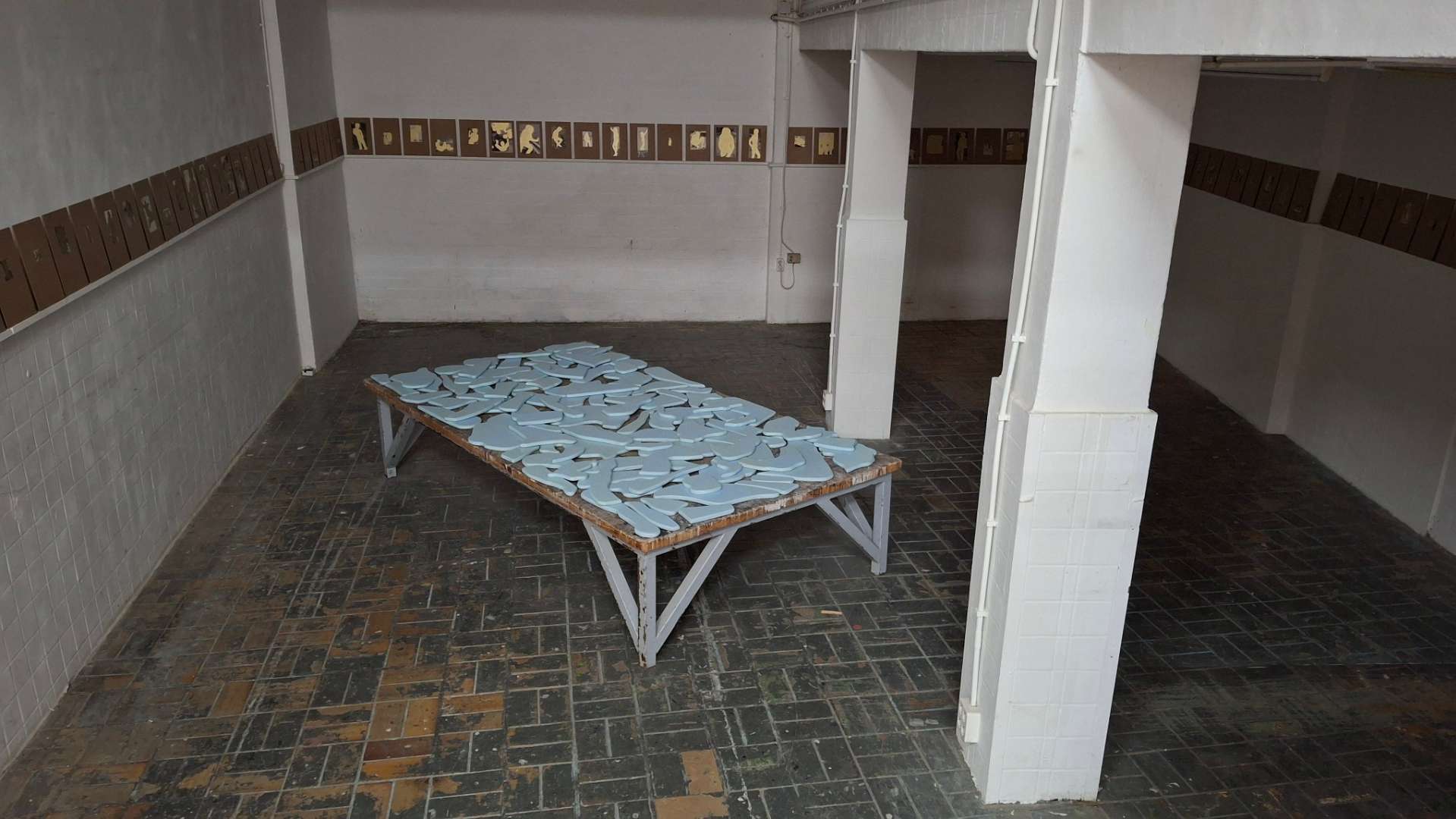
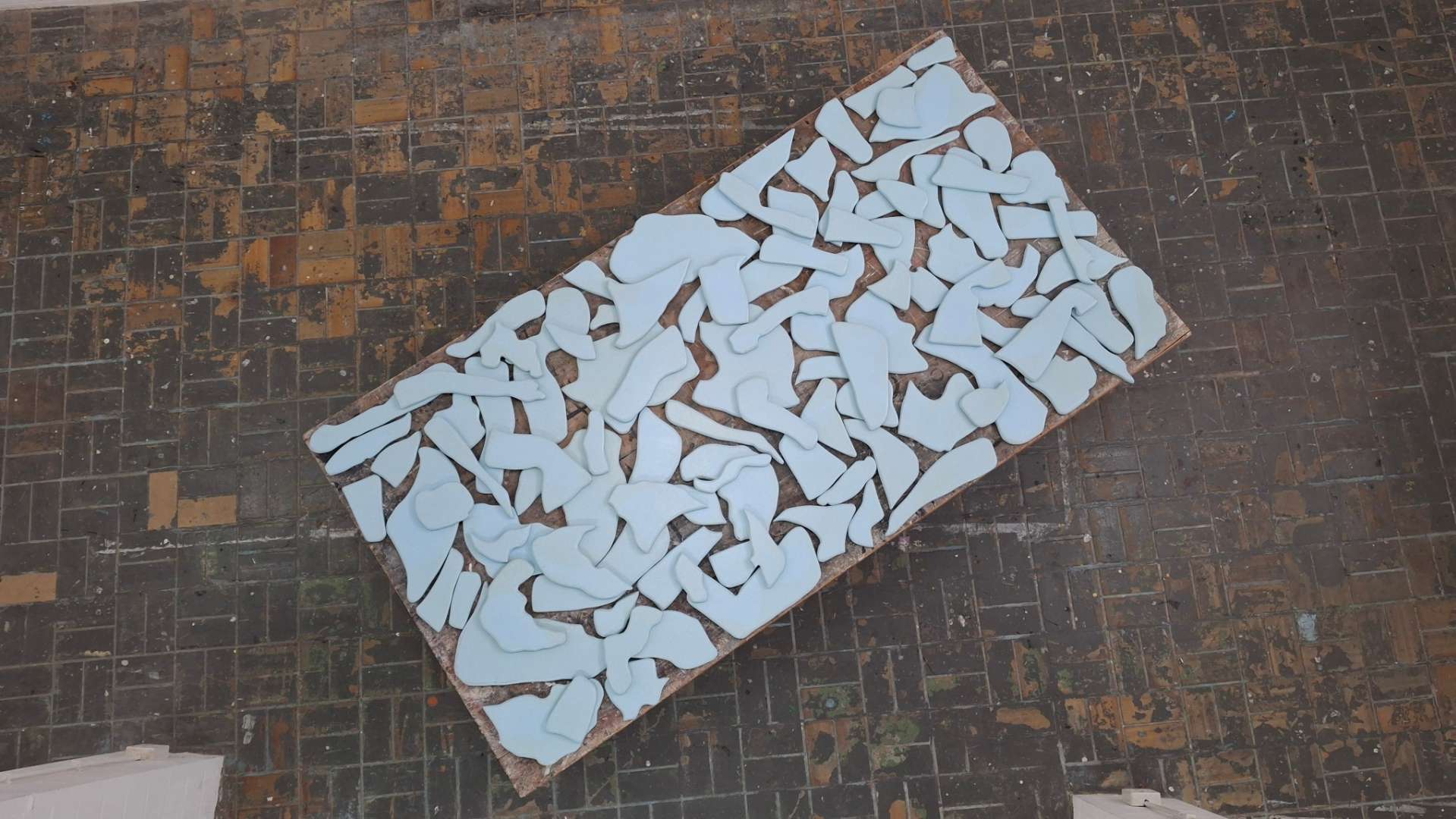
The inner forms of the industrious sawing in the installation 'een voetbalveld' that was on display in 1985 in Kunstcentrum Hollandsche Spoorweg in Nijmegen are spread out on a low table, a stage. Parts of boys. Together they form a football team. Painted blue they were also part of the presentation of Stipendia '84 in the Logement van de Heren van Amsterdam in The Hague.

Next

green

The former dairy factory's porridge board is strewn with sheets of artificial silk. If you walk over it, you will end up at a small desk with a letter box. The text 'nous venons tous du paradis, nous allons tous au paradis' was the leitmotiv in 1988 at the exhibition of the same name in Galerie Van den Crommenacker in Arnhem.

Next

gold

As in a final embrace more than 200 panels surround the space of MAAS. The wooden box contains another 100 or so. A photo is glued to each panel. Drost collected these photos 40 years ago. They are still the source of inspiration and the leitmotiv for his art today. In 1988, he exhibited these photos in a triptych at Galerie Van den Crommenacker in Arnhem. Years later, he disguised and gilded the boys and showed the triptych adapted to the modern time in 2022 at the exhibition'Bladgoudjongens' at POPOP in Nijmegen.

Next

spinario

The Spinario, also known as Boy with a Thorn in His Foot, is a bronze statue from Roman antiquity. It probably dates from the first century BC. Art historians suspect that the head and body were made separately. The hair on the head does not fall forward, which you would expect from a bent-over seated figure. It is suspected that the head was originally made for a standing statue. During his studies at the Teacher Training College in Nijmegen, Drost bought a small replica of the statue on an art trip in 1980. He created the exhibition 'Tuin voor een jonge held' at Galerie 05't in Amsterdam around this statue in 1984.


Back to archive

Next

Bart Drost

free artist

Gerlach 52
6301JD Houthem-St.Gerlach
The Netherlands